Saturday, 24 January 2026

Do You Remember Something in Particular From Your Primary School Days?

Trinity College Dublin Librarian, Therese Mulpeter, does 

She wrote an article about one specific experience in 1969 from her primary school days to accompany documents she was donating to the Research Collections at Trinity which is connected with this experience.

The article recalled how the then six year-old[!] Therese was told to become a ‘god-parent’ to an African girl who was to be given the name Anne. 

Below, is an extract from the article as it appeared online: 

“We all recognise 1969 as the year that man first stepped on the moon but few would recall that it was also the year that Pope Paul VI became the first reigning pope to step onto the African continent in Uganda.

At that time there was a practice in Catholic schools for children preparing to make their First Holy Communion to make an offering to become ‘god-parents’ to children in Africa so that they could be baptised into the Catholic faith. 

At Belgrove National School in Clontarf, my teacher Miss Heid, told us to choose a name for our ‘baby’. I was only six years old and I came up with the name Anne. 

In my young mind I thought that all these babies would be brought to the school and I would get to bring mine home. 

I puzzled over where she would sleep. 

The penny [literally] dropped when I received my god-parent card with my name and Anne’s name handwritten on the back……we would never meet. 

It was simply a very successful fund raising effort to support mission work in Africa. 

Try explaining that to a six year old! 

The only tangible connection I had with Anne was the card. 

In 1969 the Catholic population of Uganda was approximately 3 million and no one batted an eye in Ireland at holding a collection for the ‘black babies’ or of referring to an unbaptised infant as a pagan. Today the catholic population of Uganda stands at around 13 million.”

The god-parent card issued to Therese and the other pupils bore the titleCrusade for Rescue, Baptism and Catholic Education of Pagan Children

Sammy the Plaster Figure Black Baby

In his contribution to the subject published in the Irish Independent in November 2006 and titled The Little Black Babies, Rory Egan wrote as follows: 

“In many schools around the country a mandatory collection of a shilling a week was made for the 'Little Black Babies' for which one was given a small card showing a crying child. It is incredible to think that many a young schoolchild thought that it was some sort of instalment scheme and that some day they would be the proud possessor of an African child

The ultimate lasting memory of poor taste and misguided marketing was something that could be found in many schools and convents and was called 'Sammy'. Sammy was a plaster figure of a black baby whose head nodded every time a penny was placed in the slot of the box upon which he knelt.”

Remote and Alien Pagan Babies  

In a blogpost dated 26 November 2018 and titled Remote and alien pagan babies, John Grenham posted a notice originally produced by the Pontifical Association of the Holy Childhood “On behalf of the Myriad OUTCAST PAGAN BABIES” and which had been published in the Irish Independent edition of April 1, 1939. 

This notice asked for “at least a little crumb from your LENTEN ALMS”. 

“For the modest donation of 2/6 (two shillings and six pence) you can help to save one of these hapless dying babies from the cruelest of fates.”

Other Countries 

More childhood schooldays recollections about ‘pagan baby’ programmes in the 1950s / early-1960s in other countries can be found online. 

There are testimonies from Scotland, while from the United States of America, stories from the Adopt A Pagan Baby drive have been recounted. 

The following is from ABCtales on the subject of Black baby

“The St Stephen’s Digestive biscuit test was much more exacting. At school break time in the morning we could buy a Digestive biscuit off Mrs Boyle for one old penny. Some, like myself, were often excluded from this experiment because they had lots of brother and sister and too few pennies. But unlike the Stanford experiment Mrs Boyle didn’t offer two -or more Digestives for delaying, or not eating a biscuit we couldn’t afford - she offered salvation, for an old penny. She gave us the option of eating a Digestive, or buying a black baby.

If we bought a black baby for a penny it was ticked down on a sheet and when you got to  a shilling eventually you got to own a black baby and you were given a picture of it. For giving up Digestive biscuits you were sent to heaven. Now that’s what I call delayed gratification.”

Pagan Baby Contests 

Here is another recollection on Pagan Babies, this time from Telling Secrets blogspot: 

I went to Roman Catholic School, so we also had Pagan Baby Contests.   

It went like this: You had to bring in a dime every week (some of the nuns allowed you to bring in pennies or nickels which you could save up and exchange for a dime) which would then fit into a slot on a poster which had your name on it. When you got to $1, you were allowed to 'name' your Pagan Baby and the money would be sent "to the missions" so "Father" could baptize one of the little Pagan Babies with your name. 

Sister told us that we were saving the "little savages" Africa or Laos or Cambodia or Viet Nam, baptizing them in the name of Jesus. I know. Hard to believe that we once talked that way - and, meant it.  

There were 30-40 kids in my class. We had Pagan Baby Contests every 10 weeks. Not a bad fundraising scheme, eh? I used to imagine that there was a village in Viet Nam or Africa somewhere with lots of girls named "Elizabeth".

Anyway, even the Pagan Baby Chart and the Pagan Baby Certificate you got were all written in Cursive

Does anyone remember giving your change for pagan babies?

This is the question posed on Facebook and which also received quite a number of responses; perhaps, an indication of how much this childhood memory persisted into adulthood?  

The Unanswered Questions 

So many questions arise from the childhood recollections of those who are now adults today; and who were told to be a ‘god-parent’ to a ‘pagan baby’ during their schooldays. 

“Try explaining that to a six year-old”, was how Therese Mulpeter summed up her own ‘god-parent’ experience in that October 2017 article. 

Therese Mulpeter’s question certainly throws a challenge to all of us to examine and reflect on something which has had quite a profound effect on children’s lives and how, perhaps, it might have shaped their attitudes towards other people; Africans, for example? 

These will be the focus of discussion in the next blogpost. 

Monday, 5 January 2026

2026: South Africa’s Year of Human Rights Anniversaries

06 June 1966: Senator Robert F. Kennedy’s Day of Affirmation Speech

16 June 1976: Soweto Youth Uprising 

09 August 1956: Women’s March Against the Pass Laws

This year will mark three significant anniversaries in recent South African history.

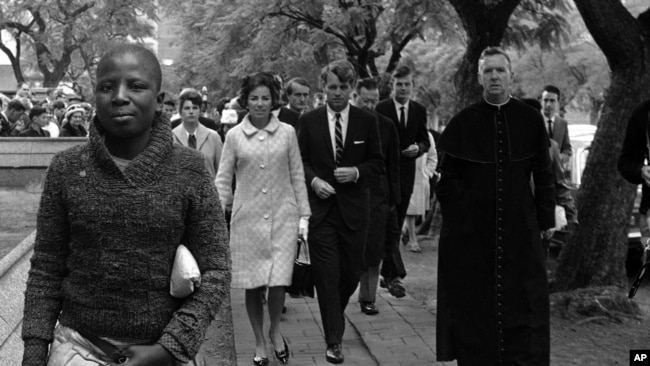
In June 1966, the National Union of South African Students (NUSAS) invited the late US Senator Robert F. Kennedy to deliver the keynote Ripple of Hope speech for the annual NUSAS Day of Affirmation event.

Ten years earlier in 1956 on Thursday, the 9th of August, the Women's March was led by four women: Lillian NgoyiHelen JosephRahima Moosa and Sophia Williams to protest against the proposed amendments to the Apartheid Group Areas Act of 1950, commonly referred to as Pass Laws . 

The organisers had collected 14,000 signatures which more than 20,000 South Africans of all racial backgrounds staged a march on the Union Buildings in Pretoria to present to the then Prime Minister J. G. Strijdom. 

In June 1976, Black South African high school students in Soweto protested against the Afrikaans Medium Decree of 1974 demanding all black schools to use Afrikaans and English in equal terms as languages of instruction.

The protests resulted in the deaths of protesting youth, including twelve year-old Hector Pieterson. seen carried by Mbuyisa Makhubo after being shot by the South African Police. Pieterson was rushed to a local clinic, where he was declared dead on arrival. 

Sam Nzima's photo showing Pieterson's sister, Antoinette Sithole, running beside them, became an icon of the Soweto Youth Uprising.

All three anniversaries are Human Rights-related; they are also significant events in South Africa's history during the difficult Apartheid era, and which contributed in no small measure in helping to dismantle the system.

Articles 1, 2, 3 and 13.1 of the United Nations Universal Declaration of Human Rights (UDHR) are particularly relevant to these events.

The UDHR is based on the principles of dignity, equality, and inalienability of human rights.


1

Born Free & Equal 

All human beings are born free and equal in dignity and rights.

2

Freedom From Discrimination 

Everyone is entitled to all the rights and freedoms set forth in this Declaration, without distinction of any kind, such as race, colour, sex, language, religion, political or other opinion, national or social origin, property, birth or other status.

3

The Right to Life 

Everyone has the right to life, liberty and the security of person.

13

Freedom of Movement 

1. Everyone has the right to freedom of movement and residence within the borders of each State.

Monday, 9 May 2022

Ukraine’s Tragedy: An Economic ‘Atomic Bomb’ for Hungary?

Why Are We Focused on ‘Economies’ While Humans Are Being Slaughtered? Can We Put An Immediate Stop To ‘Self-Interest’ Attitudes? 

Where’s Our Sense of Empathy?


“An Economic ‘Atomic Bomb’: Hungary Threatens EU’s Latest Sanctions Against Russia, Including Oil Embargo”

“The war in Ukraine is supercharging a food, energy & finance crisis that is pummeling some of the world’s most vulnerable people, countries & economies.” Secretary-General’s press conference at launch of Report entitled: "Global Impact of War in Ukraine on Food, Energy and Finance Systems" --

“Ukraine focus diverts food aid from other crisis-stricken regions”

“Ukraine war contributes to ‘perfect storm’ for famine in Somalia

The quotes above are just some of the commentary to be read, and the focus of discussions since Ukraine was attacked on the 24th of February. 

Global Crisis Response Group on Food, Energy and Finance is the title of a press release by the UN on 13 APRIL 2022, NEW YORK:

The war in Ukraine, in all its dimensions, is producing alarming cascading effects to a world economy already battered by COVID-19 and climate change, with particularly dramatic impacts on developing countries. The world’s most vulnerable people can not become collateral damage.

World on brink of “perfect storm” of crises, warns UN Chief calling for immediate action to avert cascading impacts of war in Ukraine 

Dire consequences of the war on global food, energy and financial markets could upend millions of lives

Dire Consequences?

The only real consequences anyone can or should be thinking of, as far as Ukrainians are concerned, are those from the images and sounds transmitted into living rooms (and wherever we can receive these) in the rest of the world.

The UN’s Response

So, seven weeks (or forty-one days) after the invasion of Ukraine, during which its people are being slaughtered, it seems the world’s body established to suppress “acts of aggression or other breaches of the peace”, chooses to set up a “Global Crisis Response Group on Food, Energy and Finance”; a “Global Crisis Response Group”, NOT to Save Lives?!

Put another way, when our farmer neighbour and his family are being slaughtered in an unprovoked attack, rather than deploy an emergency response, we choose to complain about a “food price crisis”

This, because our farmer neighbour and his family are unable to supply us with what we, perhaps, think we are entitled to be provided by them?

It is rather disappointing to see and to hear of the UN’s approach, when the world would have preferred and expected the immediate focus to be on intensified efforts to “save succeeding generations from the scourge of war” in Ukraine, as required through its founding charter.

The Charter of the United Nations begins with this introduction:

WE THE PEOPLES OF THE UNITED NATIONS DETERMINED

to save succeeding generations from the scourge of war, which twice in our lifetime has brought untold sorrow to mankind, and 

to reaffirm faith in fundamental human rights, in the dignity and worth of the human person, in the equal rights of men and women and of nations large and small, and 

to establish conditions under which justice and respect for the obligations arising from treaties and other sources of international law can be maintained, and to promote social progress and better standards of life in larger freedom,

AND FOR THESE ENDS

to practice tolerance and live together in peace with one another as good neighbors, and 

to unite our strength to maintain international peace and security, and 

to ensure, by the acceptance of principles and the institution of methods, that armed force shall not be used, save in the common interest, and 

to employ international machinery for the promotion of the economic and social advancement of all peoples,

HAVE RESOLVED TO COMBINE OUR EFFORTS TO ACCOMPLISH THESE AIMS.

Article Article 1.1 of Chapter 1 of the Charter is as follows:

To maintain international peace and security, and to that end: to take effective collective measures for the prevention and removal of threats to the peace, and for the suppression of acts of aggression or other breaches of the peace, and to bring about by peaceful means, and in conformity with the principles of justice and international law, adjustment or settlement of international disputes or situations which might lead to a breach of the peace 

Put simply, this also means that every effort should be made to bring an end to this war and, hence, the loss of innocent lives.

Ukraine: the World’s Tragedy

Ukraine’s tragedy is the world’s tragedy; a country which has been home, short-term or long-term, to citizens from many other countries, continues to be attacked and destroyed in a war which no-one knows when it will all be over. 

The pain of Ukraine (the land, rivers and all that they hold); the suffering of Ukrainians themselves are shared by the whole world.

The work of Ukraine’s immediate neighbouring countries to the west and south-west: Poland, Slovakia, Hungary, Romania and Moldova, who are at the forefront (and frontline) of international assistance should be acknowledged; Moldova earning the well-deserved label of / as the “small country with a big heart”.

Misplaced Priorities and / or Self-interest Approach?

It seems the priority for some people (outside Ukraine) is to engage in discussions which focus on what we think we are being ‘deprived’: food supplies which, prior to 24th February, had come from Ukraine.

Hungary: An Economic ‘Atomic Bomb’?

In his response to the European Union’s plan to ban Russian oil, as reported in forbes.com, Hungary’s Prime Minister Viktor Orban described the decision as “far too costly and would amount to an ‘atomic bomb’ being dropped on the Hungarian economy“.

A rather unfortunate choice of words, Prime Minister Orban? 

Well, Mr Orban, Russian bombs are being dropped on Ukrainian people, with more than a hundred children so far counted among those killed.


When the President of Ghana made the statement above on 29 March, 2020, the COVID-19 virus was not something physically visible, hence the difficulty in convincing people of the importance of following the measures recommended by medical authorities.

No one can be in any doubt the consequences of war: missiles physically dropped on cities; in this case, Ukrainian cities, can be clearly seen.

Ghanaians should be justifiably proud that their president received universal praise (and quote of the year, according to Professor Shari Ahmed @ShafiAhmed5) for that statement he made putting human life above everything else; especially, “the economy”:

When we see a person being killed, does it have to be someone we are directly related, before we engage our feelings and sense of empathy? 

Should we only think of what we are being deprived of, because our own material requirements which come from the victims’ home country have been disrupted?

Even worse, should we continue to obtain our energy supplies from the Russian aggressor, and in doing so, continue to fund its killing machine?

Ukraine’s Daily Reality

Ukraine’s daily reality include the following:
  • When the first bread you are able to eat was 38 days after the invasion of your country
  • Being attacked when a bomb was dropped on a railway station where people were attempting to escape to a safe destination
  • Experiencing unspeakable acts of brutality inflicted on your family and neighbours
  • Being trapped in underground bunkers in darkness for several weeks in Mariupol steelworks, not knowing if you will ever come out alive
  • Having to live your life in an underground shelter for over sixty-days before you see daylight
  • When land mines will be one of the legacies of this Russian invasion, according to The New York Times reports that: Land Mines on a Timer, Scattered Over a Ukrainian Town
  • Having to flee your own hometown, and not knowing when you will be able to get back to rebuild the home you left behind, which has now been destroyed through deliberate civilian attacks
  • A school attended by children being the latest target of indiscriminate bomb attacks
  • You see nine-year old Masha, a resident of Lysychans’k, whose city is under constant shelling, but still defiant during her interview with BBC News on 2 May

Perhaps, we might like to pause for a long reflection on the above daily realities Ukrainians have to live with?

We the Peoples …

Is the rest of the world, through the United Nations, still going to be worrying about an ‘economic crisis’? 

Indeed, is the rest of the world, We the Peoples, aware of this course of action taken by the UN on our behalf?

Where’s our sense of empathy with our fellow humans? Can we put an immediate stop to the ‘self-interest’ attitudes we are currently displaying?

Perhaps, we might like to reflect on the above questions as well?

The immediate priority should, first and foremost, be on preventing Ukraine’s people from being slaughtered, rather than bemoaning the fact that the “Ukraine focus diverts food aid from other crisis-stricken regions”?

Any discussion focused on anything, other than preventing the slaughter of innocent Ukrainians and the destruction of their country, should be deemed morally unacceptable.

Ukraine’s Tragedy and Africa: Intervention By Foreign NGOs

Another response to Ukraine’s tragedy comes from NGOs with foreign origins, who are making links between Ukraine’s tragedy and what in their opinion is Africa’s food crisis:

“East Africa is facing the worst drought in decades, with the #pandemic and conflict in northern Ethiopia compounding the crisis.

But the region is now also feeling the impact of war in #Ukraine through a spike in agricultural commodity prices.” Farm Africa.

Are Africans incapable of speaking for themselves?

Vegetables From Kenya on the Shelves of Europe’s Supermarkets

Meanwhile, these same NGOs haven’t issued a statement questioning why vegetables from Kenya (in the same East Africa) and Zimbabwe are to be found on the shelves of supermarkets in Europe.

Africans are embarrassed by the heartless manner in which outside organisations attempt to suggest that we are victims of Ukraine’s tragic circumstances.

Shouldn’t any dependence by an African country for its food needs on temperate Europe be something which must be questioned? Does Africa not have the conditions to grow its own indigenous crops?

Nonetheless, this is one African farmer’s view: “As Africans, let’s reduce dependence on imported crops whether in war or climate change.” @Chief_Tshepo

Immediate Tasks and Actions

Here is what needs to be done as a matter of urgency:
  • Every effort should be made to bring an end to this war and, hence, the loss of innocent lives
  • Rebuild the country so that Ukrainians can rebuild their own lives

Other Wars and Conflicts

After these tasks and actions have been addressed, the world should then turn its attention to other parts of the world where war and conflict still persist.

What we also need to demonstrate, above all else at this time, is: 

  • Our Sense of Empathy with the people of Ukraine
  • Show Solidarity with people in other parts of the world going through similar tragedy as Ukraine;
  • Remember what the True Meaning of ‘Sacrifice’ is: which is, to forego the things we are used to, and which are supplied by the same neighbours who are now in a tragic situation.

These must be the only things which should be on our minds until our fellow human beings see peace return to their country.


Secretary-General Gutteres in Kyiv
After seeing things for himself in Kyiv on Thursday, 28 April, during a visit which also saw a Russian missile attack on that city, UN Secretary-General Antonio Guterres can be in no doubt regarding what the urgent priority should be?

Yes, we know how to bring the “finance systems” back to life; what we do not know is how to bring Ukrainians back to life. 

We must ensure Ukrainians stay alive.

#StandUpForUkraine


Thursday, 31 March 2022

Ukraine in the Irish Classroom

What Do We Know About Our Newly-Arrived Neighbours?

In August, 1979, the Irish government agreed to take in over two hundred Vietnamese refugees. 
Later refugee populations to arrive in Ireland under an Irish government scheme came from Bosnia, Syria and Afghanistan.

The latest refugees this time to arrive in Ireland are from Ukraine.


Africa in Ireland is making a special exception to look at a country (and a subject) outside the African continent; we are directing attention to Ukraine and its citizens during this terrible period in their country’s history.

Ukraine: the World’s Tragedy

Ukraine’s tragedy is the world’s tragedy; a country which has been home, short-term or long-term, to citizens from many other countries, continues to be attacked and destroyed in a war which no-one knows when it will all be over. 

The pain of Ukraine (the land, rivers and all that they hold); the suffering of Ukrainians themselves are shared by the whole world.

We acknowledge the work of Ukraine’s immediate neighbouring countries to the west and south-west: Poland, Slovakia, Hungary, Romania and Moldova, who are at the forefront (and frontline) of international assistance.

School-going Age Arrivals

In all cases, arriving refugees have also always included those of school-going age, who will be continuing their learning alongside Irish children.

So, what do their newly-encountered Irish classmates know about them and their country of origin?


Thanks to the NCCA, we have the answers: in the SESE Geography primary curriculum, the relevant strand unit is People and Other Lands.


A second strand unit which will introduce Ukraine to Irish children is Myth and Legends in the Story Strand of the SESE History primary curriculum; as the saying goes: “It starts with a story”.

One can never go wrong with a good story, and that’s why this is a good starting point; myths and stories from the place under discussion are also included in the People and Other Lands strand unit.

The Myths and Legends strand unit also offers integration links as illustrated below:


People and Other Lands: the strand unit areas

In a peaceful Ukraine which we are all praying for, what will your hosts feed you? 

It is the wish of the world’s majority to see Ukrainians baking their favourite Paska this coming Easter in a peaceful country without a hostile foreign presence.
Paska (Easter Bread)
Photo Credit: Korena Vezerian

In a peaceful Ukraine without foreign occupation:
What are their myths and stories? Art and Culture?
What are the similarities and differences between Ukraine and Ireland?

All these and many other questions have been posed and are expected to be answered in the People and Other Lands strand unit, where a helpful exemplar has also been included (please, see below):


As we continue to pray for peace to return soon to the beautiful country of Ukraine, we need to provide Irish children with the necessary information about that country, in order to broaden their perspectives and achieve understanding of their newly-arrived neighbours.

Thanks to the NCCA, resources on Ukraine, with a focus on the two strand units identified earlier: People and Other Lands in SESE Geography and Myths and Legends in SESE History can be produced as the first step in the broadening of perspectives and the achievement of understanding.